

How To Decock A Pistol Safely And Easily
There are a number of operating systems common to modern pistols, and we still meet near on the range regularly. However, 85 percent of the guns students bear witness up with autumn into the polymer, striker-fired category. The last 15 percent feature other operating systems. These include 1911-way guns, a few other rarer designs, the occasional revolver and those nosotros refer to as "de-cocker" systems.
De-cocker way guns were common during the seventy's, 80's, and 90's. Southward&Due west, SIG, H&G, Walther and Ruger (among others) produced vast quantities. With the accommodation of the Beretta 92 past the US War machine in 1980, hundreds of thousands of decocker-equipped firearms accept been produced for war machine, constabulary and non-LEO civilian consumers.
De-cocker equipped pistols (generally) have an exposed hammer. Here's how they work . . .
– The gun is carried with the hammer down. When drawn, the trigger is found in its virtually forward position, and requires a long, heavy press every bit it mechanically cocks the hammer for the first shot.
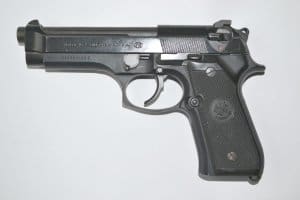
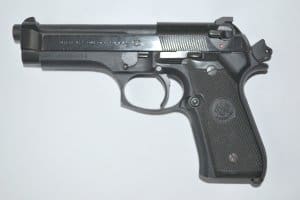
– After the showtime shot, the slide will cycle and automatically erect the hammer for the next shot, resulting in a shorter, lighter second trigger press. With the first shot, the operator manually cocks the hammer by pressing the trigger, for the following shots, the slide role re-cocks the hammer.
– When firing is complete, the pistol needs to be "de-cocked" in order to render it relatively safe before holstering. To accomplish that, most are equipped with either a lever or button which allows for the hammer to exist lowered safely on a loaded sleeping room.
Generally, de-cockers come in two flavors: Single-Phase and Two-Stage.
Single Stage de-cockers work by depressing a lever or push button. As the mechanism is spring-loaded, no other deportment are required.
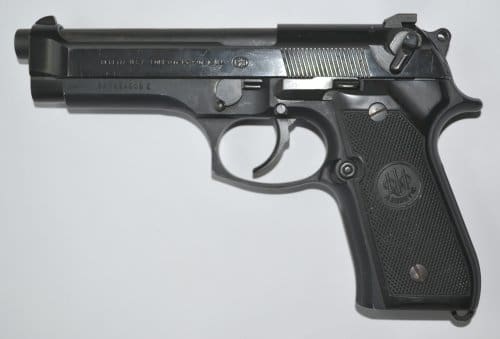
Two Stage de-cockers are usually a lever (non a button). They require an initial press downwards to de-cock. Then the user must manually render the lever to its starting position, to re-enable the firing machinery. On most designs, leaving the lever engaged results in a dead (i.e., non-functional) trigger.
De-cocking lever is down, requiring manual movement upwards to re-enable the pistol. In this state, the trigger is dead. On the Beretta, the de-cocking lever doubles as a manual safety.
As every police department in the nation, the vast majority of our students and at present the United states of america armed forces take figured out, de-cocker way operating systems suck. They offer no tangible safety do good. In fact, they create needless safety and grooming problems.
Once nosotros explicate the ins-and-outs of de-cockers to students, we often field two sarcastic questions:Who came up with this? Why would they think this is a adept idea? Here's what I've discovered . . .
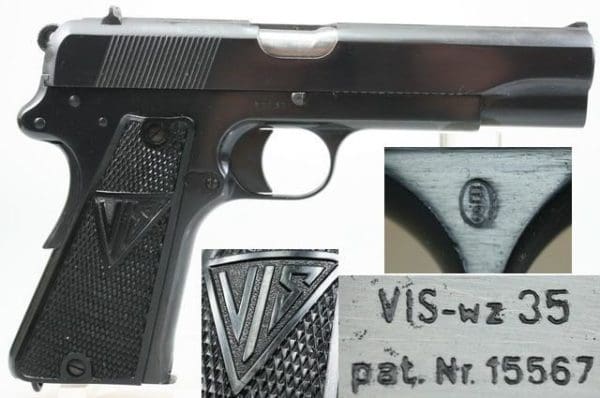
The Polish wz. 35 Vis —also known every bit the Radom —seems to be the first de-cocker equipped pistol. Designed by Piotr Wilniewczyc and Jan Skrzypiński, introduced in 1931/32, the 1911-way pistol chambered in 9mm had a de–cocker lever on the slide (reminiscent of the Beretta 92F). It likewise sported a manual condom.
My best gauge for the newfangled "safety" system: Wilniewczyc and Skrzypiński had patent issues to consider . . .
Browning was working on the Howdy Power for FN (Fabrique Nationale) in the early twenty's. He'd sold the patent rights on the 1911 to Colt, and they weren't due to expire till 1928. He received a patent for the Hi Power in 1923. The Hi Power was the work-effectually for the 1911 patents which he no longer owned.
Both the 1911 and Hi Power employ the unmarried action/double action, "artsy and locked" mode mechanism; they were quickly becoming the most popular auto-loading pistols of the solar day. In 1931, when the Radom appeared, the 1911 patents had expired, merely the Hi Power patents were still in place.
Manufacturers needed something marketable that resembled the Hi-Power's operating system, even so didn't invite lawsuits. Thus, the idea of "first press cocks the hammer, slide does the rest" was born.
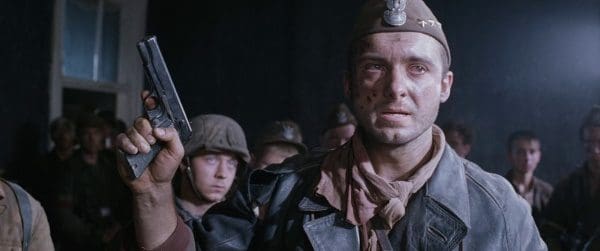
We know subsequently the Smoothen Army adopted the Radom, FN assisted them with establishing a factory to produce it. Ergo, no patent problems. In the end, the de-cocker's history is academic. These odd creatures exist. They will remain with us. We demand to know how to run them!
With two different trigger positions and two different trigger weights, de-cocker equipped pistols crave training and do to principal. Whether y'all own one or not, whether you find de-cockers a PITA or a boon to your ballistics, a true "operator" will possess the necessary skills to run the gun. 'Cause you never know . . .
Source: https://www.thetruthaboutguns.com/the-truth-about-pistol-de-cockers/
0 Response to "How To Decock A Pistol Safely And Easily"
Post a Comment